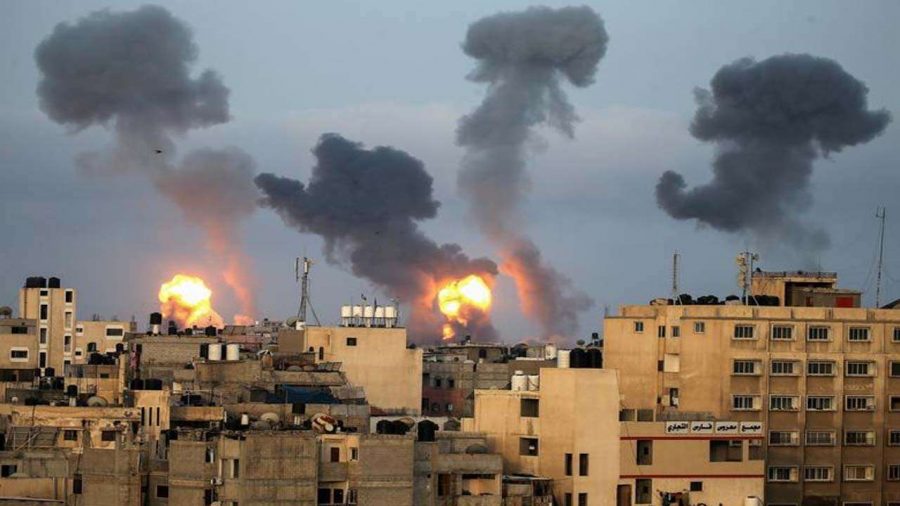

Over 150,000 killed, fourteen million displaced, genocide declared, and over 30 million deemed “in urgent need of humanitarian assistance” by the UN.
The civil war in Sudan is regarded by many to be the current worst war in the world.
Conflict reignited in April 2023 between the Sudanese Armed Forces (SAF) and the Rapid-Support Forces (RSF) after days of tension. The RSF deployed troops around the country, which the SAF viewed as a threat, leading to civil war.
The Sudanese Armed Forces (SAF) are led by General Abdel Fattah al-Burhan, who currently serves as the de facto president of Sudan. The paramilitary group known as the Rapid Support Forces (RSF) are led by General Mohamed Hamdan Dagalo, or “Hemedti.”
Both sides are accused of war crimes. The SAF have allegedly launched indiscriminate bombings against civilians in urban areas, and the RSF are accused of waging mass sexual violence, targeting refugees, and committing acts of genocide in Darfur.
What led up to this?
In 2019, the SAF and RSF joined forces to overthrow Sudan’s dictator Omar al-Bashir, who is currently wanted by the ICC for crimes against humanity, war crimes, and acts of genocide.
Together, Burhan and Hemedti ruled a brief civilian government with Abdalla Hamdok as the prime minister. In 2021, however, the SAF and RSF orchestrated a coup against the civilian government, ousting Hamdok.
Later that year, Hamdok was briefly reinstated after agreeing to relinquish some powers to Burhan and Hemedti. Mass protests occurred against these reinstatement terms, leading to a violent crackdown by police and Hamdok’s resignation in early 2022.
Subsequent negotiations on a plan for a new government deteriorated for a multitude reasons, primarily over disagreements on the proposed integration of the RSF into the SAF and the elevation of Hemedti to a status of power equal to Burhan.
Experts believe the conflict stems from Burhan and Hemedti’s desire to hold onto their positions of power.
Tensions over the power struggle continued until explosions rocked Khartoum in April 2023, with both sides accusing the other of firing first. Since then, civil war has exploded, quickly engulfing the entire nation.
Ethnic cleansings and genocide in Darfur
The RSF and allied militias launched repeated attacks in El Geneina, capital of Sudan’s West Darfur State, from April to June 2024.
Forces reportedly targeted predominantly Massalit neighborhoods, committing abuses including torture, rape, and looting.
Human Rights Watch attests that the RSF is targeting Massalit and other non-Arab communities in the region in order to force them to permanently leave Darfur, an act which constitutes ethnic cleansing.
RSF forces have reportedly shelled refugee camps, fired on fleeing civilians including children, and worked to prevent civilians who remain from accessing aid.
In January 2025 under the Biden administration, the US declared genocide in Sudan, citing RSF and allied militias’ systematic attacks against civilians of certain ethnic groups.
Secretary of State Marco Rubio maintained this position in his confirmation hearing as the Trump administration took office.
This is the second time in the past two decades that genocide has been declared in Darfur.
The first occurred in the Darfur War from 2003-2008, when the Sudanese government and Janjaweed militia carried out systematic slaughters of Fur, Zaghawa, and Masalit communities in Darfur, killing over 300,000 and displacing nearly three million.
The International Criminal Court (ICC) later condemned the Darfur War as a genocide and charged then-president of Sudan Omar al-Bashir with genocide and crimes against humanity. The ICC’s arrest warrants have yet to be fulfilled, and Bashir is currently under SAF detention on domestic charges at a medical facility in Sudan.
The Janjaweed militia was a group funded by then-president of Sudan Omar al-Bashir to repel rebels in the south and fight in the Darfur War. In 2013, Bashir helped formally organize the Janjaweed militia into an official organization: the RSF.
What is the current situation?
Experts warn that the situation is increasingly dire. The UN estimates that 30.4 million are in need of humanitarian aid, 637 thousand face “catastrophic food insecurity, and over 12 million have been forcibly displaced, the majority of whom are still trapped in Sudan.
The war is destroying Sudan’s healthcare infrastructure, as outbreaks of diseases like cholera, dengue fever and malaria are spiraling.
While most of Sudan’s refugees remain internally displaced, bordering nations are struggling against the influx of refugees.
Foreign influence further fuels the conflict, with experts alleging Egypt backs the SAF while the UAE is arming the RSF.
International support for aid in Sudan faces challenges from funding shortfalls. Of the UN’s $4.2 billion appeal for the 2025 Sudan humanitarian aid plan, only 27.3% has been funded so far.
The Trump Administration’s freeze on foreign aid funding in January has reportedly further worsened the crisis, as many local aid organizations relied heavily on USAID for funding.
In recent days, the RSF fully captured al-Fashir after an 18-month siege, the final part of western Darfur outside of RSF control.
The SAF withdrew its forces from the city, leaving 200,000 civilians trapped within. Videos within the first 24-hours show RSF chasing and killing civilians, which the RSF claim are fabricated by the SAF.
Early reports indicate massacres are already underway, raising fears of yet a third ethnic cleansing and genocide in Darfur.